Support that starts with the restaurant
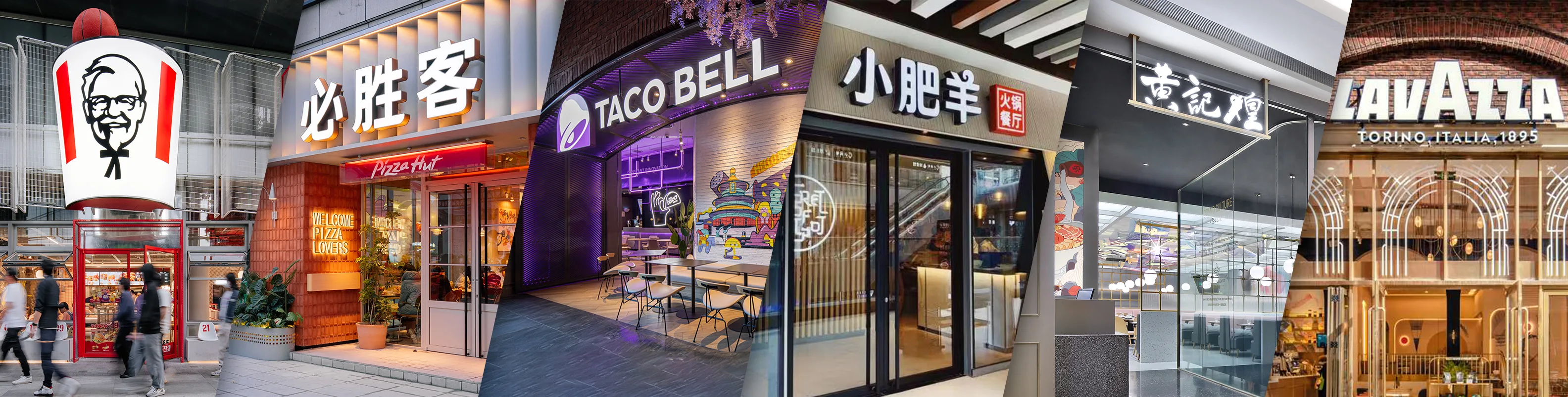
Yum China operates a portfolio of restaurant brands that includes KFC and Pizza Hut. Behind the restaurant experience, teams need support with IT issues, customer complaints and other operational requests.
The original service model asked restaurants to find the right departmental process themselves. Response expectations varied, and staff had limited visibility into who owned a case or what would happen next. The project set out to give restaurant teams one place to ask for help, with a named owner and a visible route to resolution.
Connect departments without replacing their systems
AlphaFlow BPA provides the workflow layer between the service entry points and departmental systems. It coordinates case routing, escalation and status updates while existing applications continue to handle their specialist work. Desktop and mobile experiences give teams access to the shared service workspace.
The Phase I proposal defined two initial departments: IT, with an existing ITSM system, and Public Affairs (PA), for which service workflows and case records would be established. ITSM connectivity was intended to preserve the existing ticket lifecycle while bringing case and status information into the shared service view. The first phase focused on these two departments.
Keep someone responsible for the whole case
The case study highlights automatic routing based on restaurant, service category and organization rules. Once assigned, a case owner gives the restaurant a clear point of contact as work moves through the support process.
Service-level rules guide response expectations and escalation. The shared view brings together the owner, expected completion time and case progress. The proposal also calls for ownership to remain clear when a specialist or second-line team becomes involved, so the restaurant does not have to reconstruct the handoff.
Automate the handoffs and support human judgment
AlphaBot retrieves restaurant and customer information, synchronizes status and invokes backend systems within the service workflow. These actions connect the case record with the systems needed to handle it.
The case study also describes AI assistance for complex cases such as complaints. It supplies analysis suggestions for the person handling the case. The workflow organizes responsibility and review, while AI and automation assist with analysis and repeated operations.
A clearer view on desktop and mobile
The desktop workspace brings initiated, pending and handled work into a shared view. The mobile complaint form provides a way to capture case details and prepare the information needed by the responsible team.
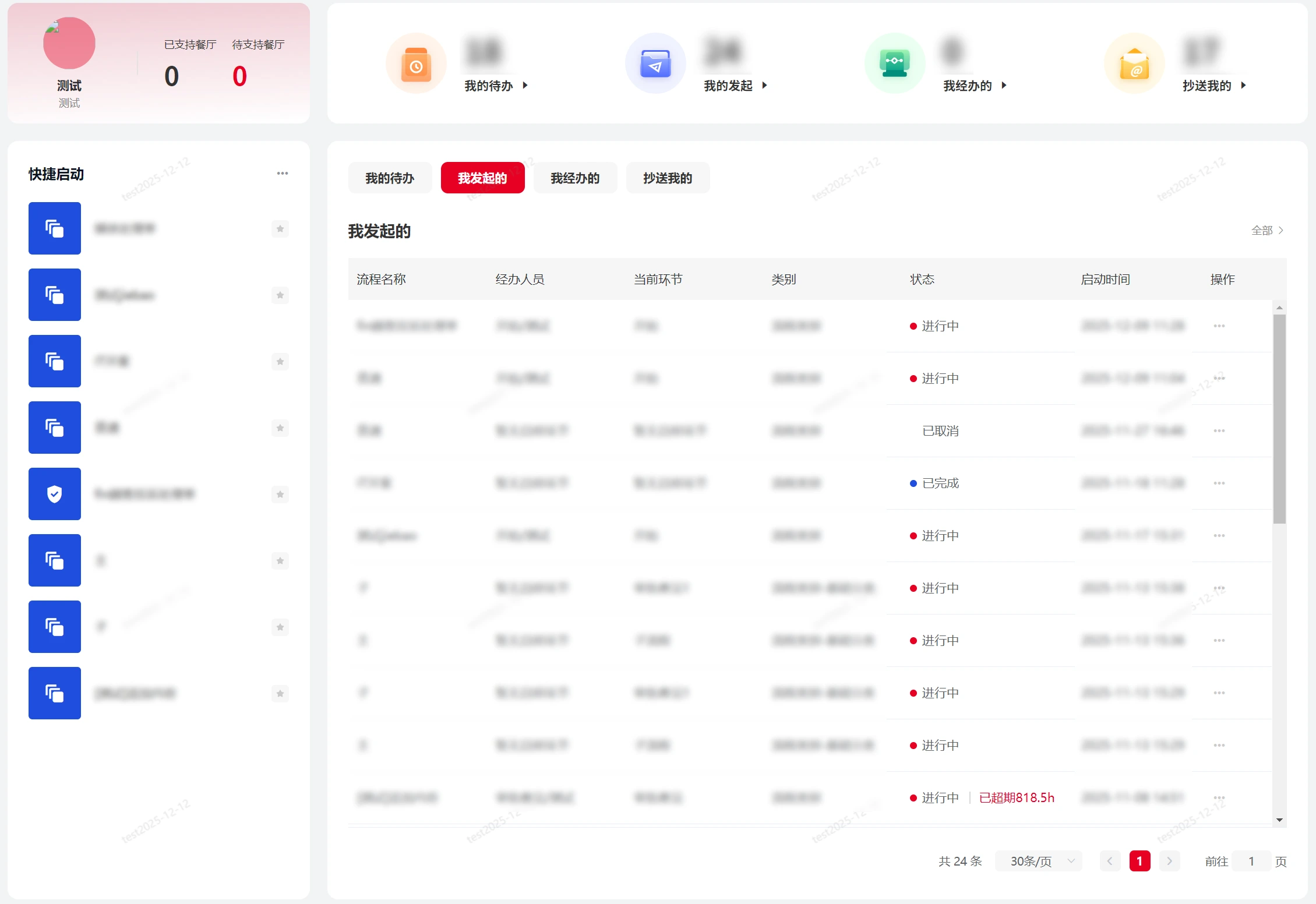
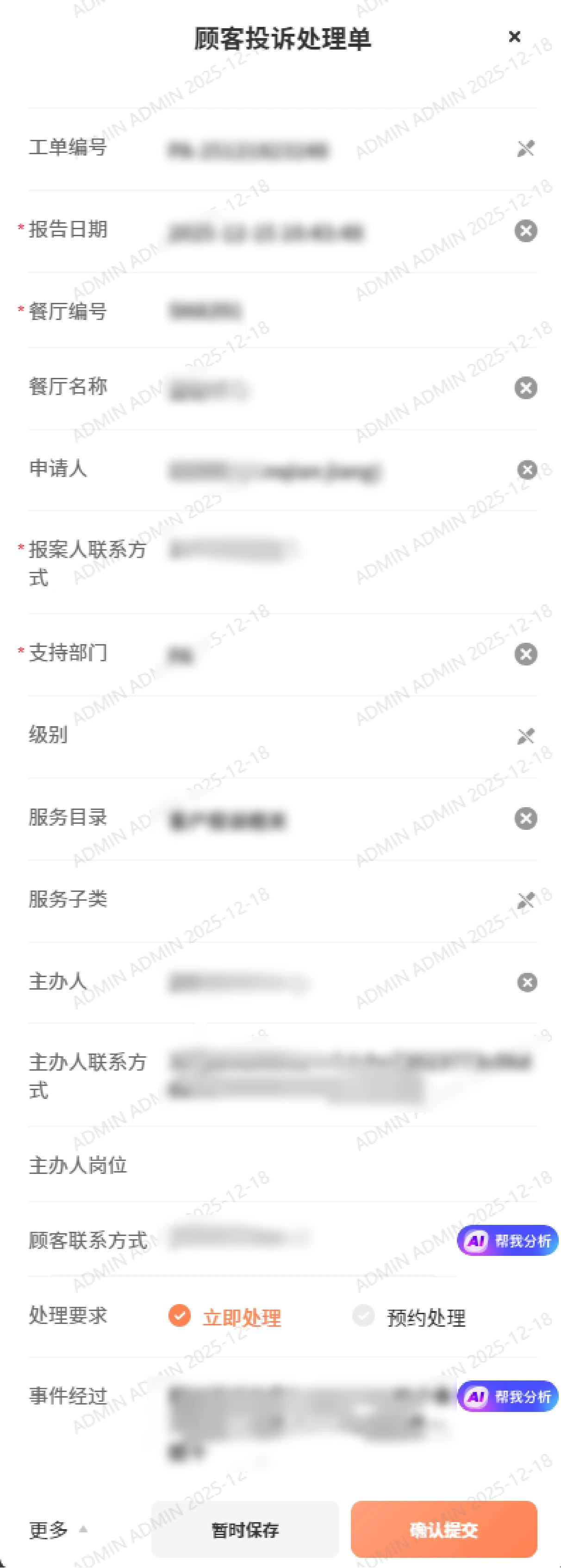
Chinese-language interfaces.
Reported operation at scale
As of March 2026, the project reported 2,687,000 workflow instances started and more than 1.08 million cumulative AlphaBot invocations. The robot invocation success rate was 99.93%, with more than 8,000 AlphaBot invocations reported per day.
These figures cover workflow starts and robot calls within the unified service desk. The daily figure does not specify an averaging period.
KEY TAKEAWAYS
Takeaways for your team.
- Keep the restaurant-facing case owner clear even when specialist work crosses departmental boundaries.
- Unify routing, status and service visibility while retaining systems that already support specialist teams.
- Track workflow starts, automation calls and service outcomes as different measures.